

Of course, we all love our pets. They’re so cute and warm and snuggly and sweet! But did you know that owning an animal can provide incredible benefits to your mental health and wellbeing? And registering your pet as an Emotional Service Animal can provide benefits beyond what you might be thinking!
What is an Emotional Support Animal?

An Emotional Support Animal, or ESA, is an animal that provides a therapeutic benefit to a person who is struggling with their mental health. These animals are not service animals. However, they are known to provide many mental health benefits to their owners including support, comfort, and companionship.
What Are the Benefits of Having an ESA?
As I said before, animals are great for your mental health! Animals are known to decrease symptoms of loneliness, anxiety, depression, and Post Traumatic Stress Disorder. They give you something to look forward to throughout your day or your week. Caring for something, whether it’s a plant, a partner, or an animal, is known to improve your overall quality of life.
For example, if you struggle to find the internal motivation to exercise, a dog may help you by providing motivation to go on daily walks. If you struggle to get out of bed on time, an animal may act as a natural alarm clock when it’s time for them to be fed.
When my husband and I got our cat in 2016, I was experiencing severe depression and anxiety. I was having daily panic attacks and struggled to leave my apartment. Having my sweet kitty cat, Moony, there with me when I was struggling provided more help than I can explain. She somehow always knew when I was upset and would come to find me, offering her pure love as an anecdote to my pain. Comment below the ways that your animals have improved your quality of life!
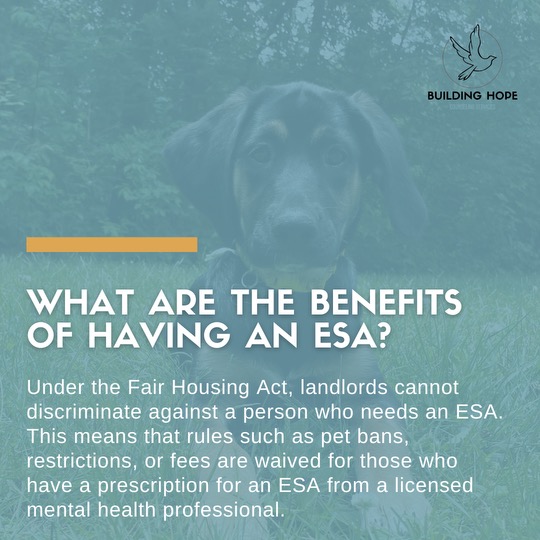
Under the Fair Housing Act, landlords cannot discriminate against a person who needs an ESA. This means that rules such as pet bans, restrictions, or fees are waived for those who have a prescription for an ESA from a licensed mental health professional, like me!
What are the Limitations of Having an ESA?
A recent change in law now allows airlines to have discretion on whether to fly ESAs as pets or service animals. Each airline has its own rules about whether ESAs are allowed onboard. Receiving documentation that your animal is an ESA does not necessarily mean airlines will provide support, such as waiving fees. It will be up to you to check with your airline before you travel to learn of any restrictions for flying your animal.
ESAs require care, just as any regular pet. Before adopting an animal, make sure that you have the resources needed to care for this little friend, including financial stability, time to dedicate to their care, and space for them to live their best lives in your home.
Do I Qualify for an ESA?

Those who qualify for a disability under the Americans with Disabilities Act (ADA) qualify for ESAs. The ADA includes mental health diagnoses such as depression and anxiety as disabilities.
Building Hope offers psychiatric evaluations to residents of Massachusetts to determine the benefits of an animal to our clients. You will fill out three assessments and meet with a licensed professional (that’s me again!) for 15 minutes to determine your eligibility. Building Hope will then provide a letter to housing authorities, such as your landlord, and travel authorities, like airlines, to certify your animal as an ESA.
How Much Does an Evaluation Cost?

ESA evaluations cost $150 for first time clients. Letters will be renewed annually at $125. Mention this blog post, “Pawsitive Vibes”, for 20% off your first evaluation!
Resources:
The information provided here is for educational and informational purposes only. It is not a substitute for professional advice, diagnosis, or treatment.
If you or someone you know is in crisis, please reach out to the National Suicide and Crisis Hotline at 988 or visit 988lifeline.org.
For longer-term mental health care, you can find therapists in your area on psychologytoday.com.
If you are in Massachusetts and seeking therapeutic services, please fill out the contact form on buildinghopema.com or reach out to me directly at mikaela@buildinghopema.com.
Remember, seeking help is a sign of strength, and you don’t have to face challenges alone.
 Building Hope Counseling Services
Leave a comment