As the new year approaches, many of us will feel pressured to set resolutions – Lose weight, earn money, be “better” in an unspecifiable way. If you are anything like me, you will forget or give up these resolutions by February.
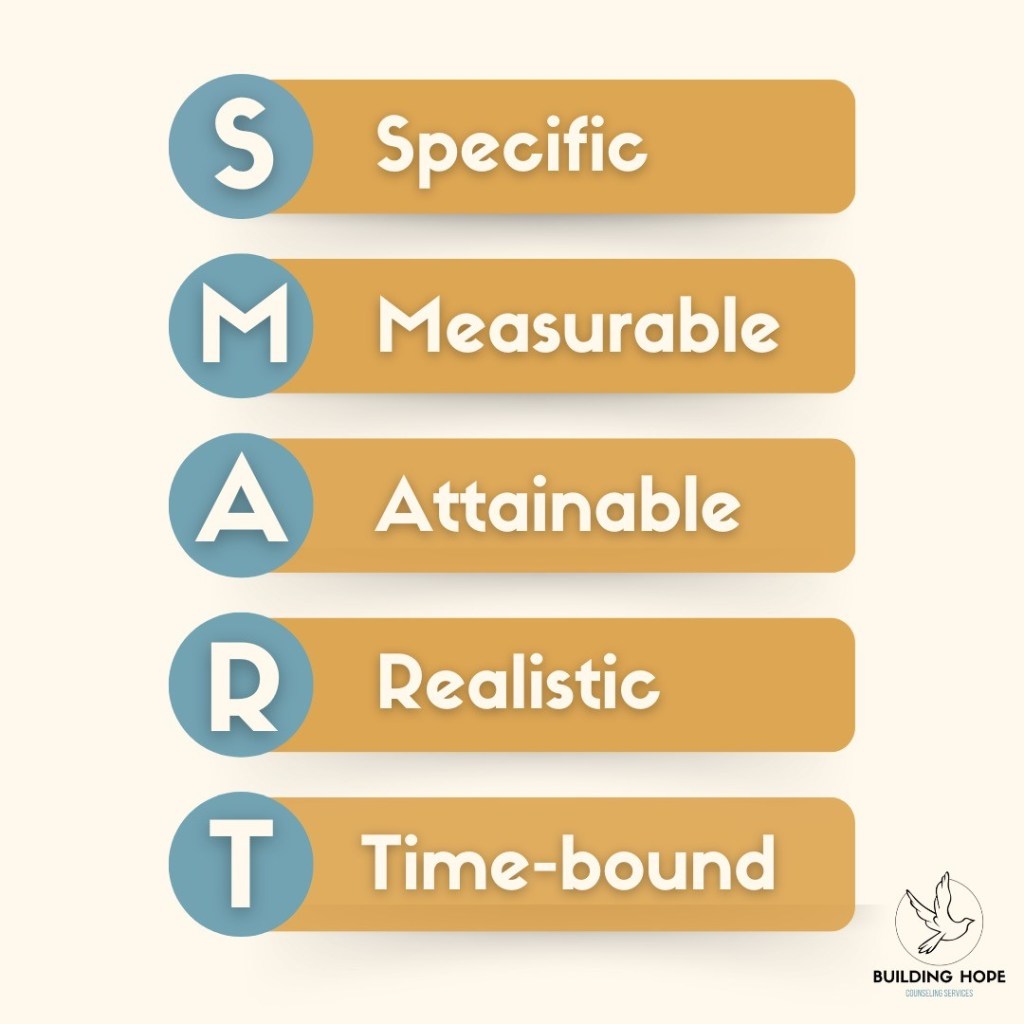
This year, I encourage you to practice goal setting. Setting goals can be a great way to practice both reflection and forward thinking. To me, the difference between a goal and a resolution is how SMART the plan is.
Let’s use improving mental health as a guide to learn how to set goals.
Specific
The goal of improving mental health is too nebulous, too wide, and undefined. Instead, consider a specific practice that would improve your mental health, such as meditation.
Do – This year, I will learn to meditate to improve my mental health.
Don’t – This year, I will improve my mental health.
Measurable
Goals that are measurable are easier to reach because you know exactly what you are reaching towards. The words “more” and “less” do not give enough structure to be helpful in working towards your goal.
Do – Meditate for 20 minutes, 3 times a week.
Don’t – Meditate more.
Attainable
You know yourself and you know your limits. In some cases, “shoot for the moon, land among the stars” is great advice. Sometimes shooting for the moon will seem so daunting, you’ll never even launch.
Do – Meditate in the evening.
Don’t – Meditate 3 times a day every day.
Relevant
Choose a goal that makes sense to you and to your life. Try not to be so stuck in your idea of what should be that you forget to leave room for your humanity.
Do – Choose a meditation that will help me reset from the day.
Don’t – Only practice loving-kindness meditation, never deviate!
Time-Bound
Maybe a year feels like too long of a time. Could you reevaluate your goals every 3 months to make them more attainable and relevant?
Do – Reach goal of meditating 20 minutes three times a week by March.
Don’t – Will meditate eventually.
Final Thoughts
Ideally, your goal will look something like this if you follow the SMART structure: Improve mental health by choosing a relevant meditation for 20 minutes, 3 times a week, from now until March.
You can practice goal setting whenever feels right to you. It is a good way to look both behind and in front of you simultaneously. Using the SMART acronym can help you to plan and complete your goals and continue helping you to live your best life.
What is your goal for 2024? Make sure you check back in the next few weeks to hear my goal for Building Hope in 2024!
Comment your SMART goal on this post! If you are an email subscriber, you can comment by responding directly to this email.
Thank you so much for your continued support. Sending you peace and love to fill your 2024.
Happy New Year!
 Building Hope Counseling Services
Leave a comment