
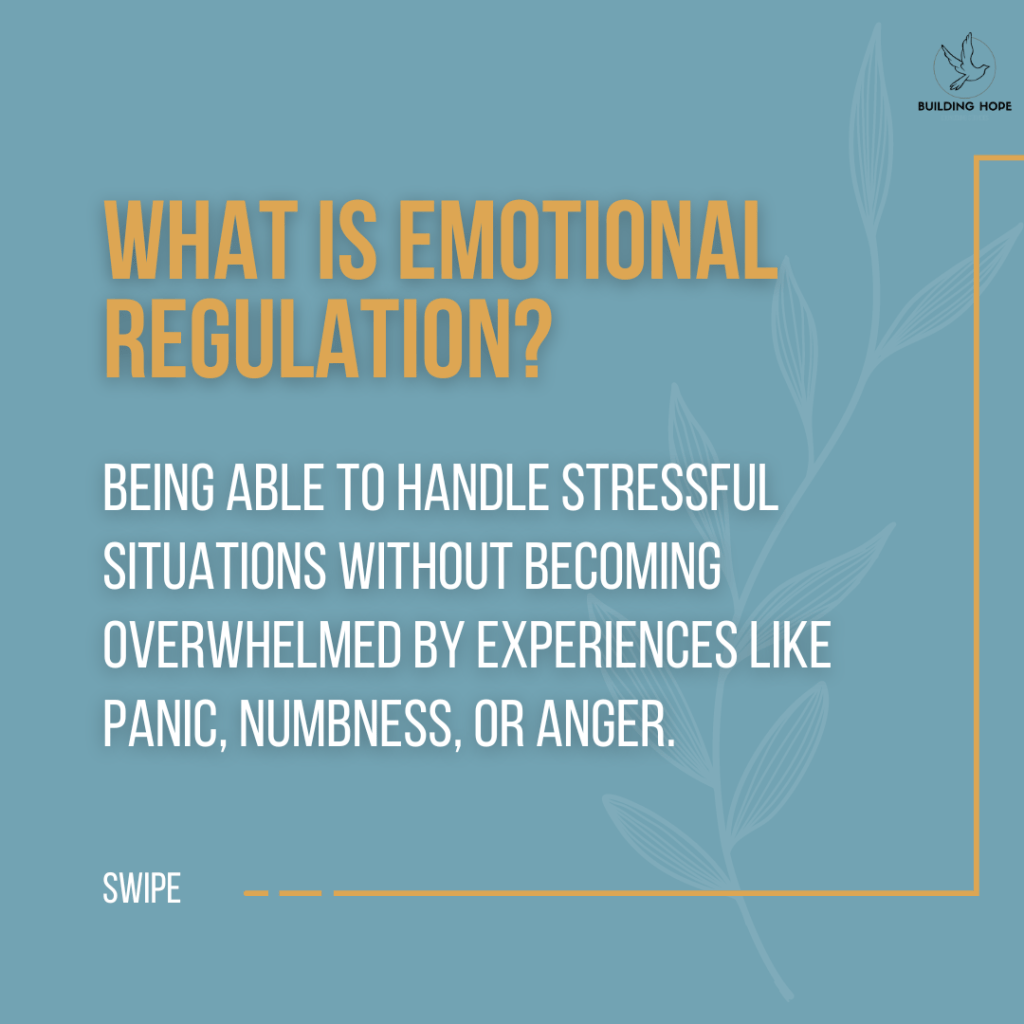
We all can get out of sorts sometimes.
It can be difficult to keep cool while we are facing stressful situations. Those of us who are healing from trauma can have an even more difficult time remaining regulated. This experience can might make you feel like you’re crazy or like there’s something wrong with you.
There’s nothing wrong with you! Your body reacts just how bodies react when stressful situations happen to them. You are not alone.
When you consider engaging in trauma therapy, especially EMDR, your therapist will spend some time helping you learn how to regulate your emotions before you begin working on the trauma itself. This will help you to effectively work through the trauma without becoming overwhelmed by the experience.
Let’s look at what emotional regulation is and how we can help ourselves stay in the present moment, no matter what we are facing.
Window of Tolerance

We all have a window in which we can handle life without becoming overwhelmed. Mental health professionals refer to this as a “window of tolerance”.
People who are healing from trauma or those who are overwhelmed by life may have a smaller window opening than they would like, or they may leave the window quickly and have difficulty returning.
When you are hyper aroused, you may feel panicked, anxious, overwhelmed, irritable, or angry. This means you are above what your nervous system can handle effectively, and you need strategies to come down.
When you are hypo aroused, you may feel depressed, numb, or dissociated. When we are below our window of tolerance, we may want to give up or we may feel frozen. This means that your body is so stressed that it has decided to shut down for a little while. You need strategies to come up.
The good news is that there are ways to both increase the size of your window, as well as your ability to stay within the window that you have!
Next, we are going to explore how to regulate your body when you are over or underwhelmed.
Using Your Body to Regulate Your Body

Your body is so incredible. It is constantly trying to help you to stay safe. Sometimes it needs a little help to accomplish this goal.
Sight, smell, touch, taste, and sound can be simple and effective ways to help yourself regulate when you are feeling anxious, depressed, or anything in between.
Try This!
Sight – Look around. Notice the colors that you see. Notice any plants, dirt, trees, or water around you. Describe what you see to yourself in as much detail as possible.
Smell – Citrus fruits can be invigorating and very grounding. Peel an orange and notice how the scent fills the room. You may consider freezing an orange for moments where you need help to regulate. As you warm the orange in your hands, the texture, temperature, and smell will change. And at the end you get a tasty snack!
Touch – Do you have a favorite texture? Walk around the area you are in and feel the differences between wood and wool, hard and soft, smooth and fluffy. Notice when your body wants to continue feeling a specific texture, or if it does not like what it is feeling.
Taste – Something crunchy, something salty, or something sweet will help you to focus on what is happening in the present moment. Do your best to incorporate healthy options when using this strategy, like brushing your teeth or eating trail mix. But honestly, if the ice cream makes you feel better, have the ice cream.
Sound – Music can bring you up and it can bring you down. Consider making multiple playlists – Music to calm and music to energize, music to embolden and music to center.
Final Thoughts
Emotional regulation is a skill that many of us (including me!) can improve. You can use your body to help your body to stay within its window of tolerance and to improve your ability to manage stress.
How will you practice self-regulation this week?
You can start by being mindful of your own window of tolerance, and then start practicing ways to stay within it or to expand its opening.
Would you like more suggestions on emotional regulation? Because I’ve got tons!
Let me know in the comments if you would like a Part 3.2 of the series “Healing Trauma”. Don’t forget to look at the past two posts for this series to learn more about what trauma is and how to heal using EMDR.

 Building Hope Counseling Services
Leave a comment